
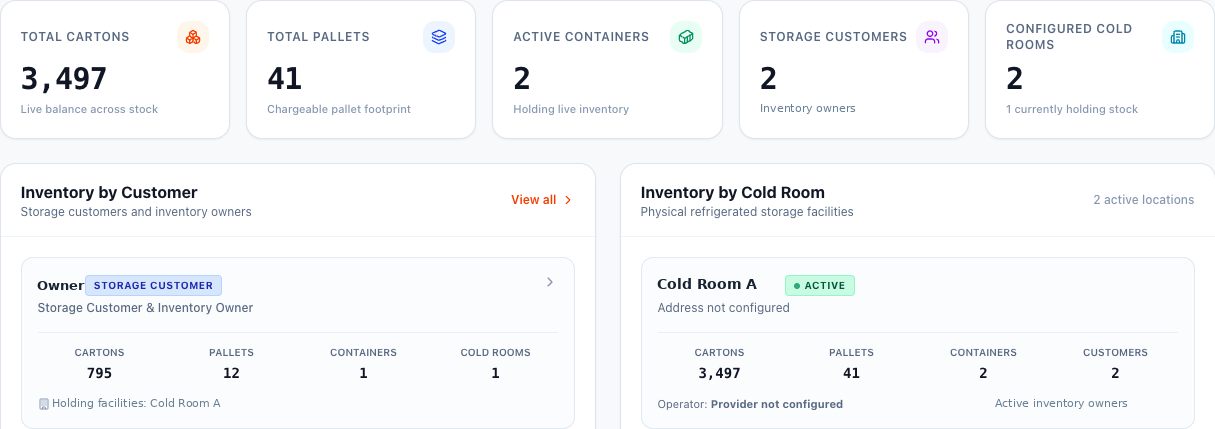
A container arrives. The goods are received into cold storage. A customer asks how much stock is available. Later, a dispatch changes the balance. Then come the warehouse handling and storage charges that need reviewing.
Each step is familiar to a fruit importer. The difficulty is keeping the information connected, accurate and accessible to the people who need it.
For 3YY Fresh, a Singapore-based fruit importer and wholesaler, these are part of everyday operations.
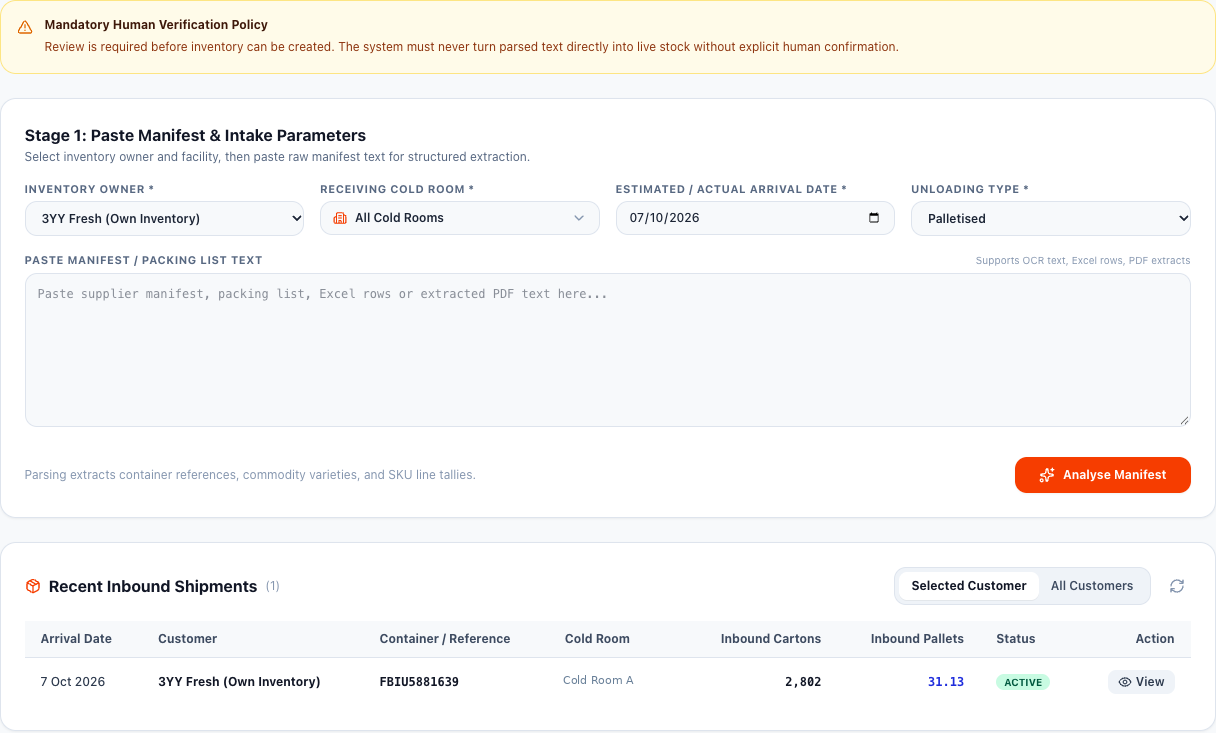
3YY Fresh actively uses R2U Warehouse Control Tower across four functions: container receiving, stock balances, dispatch management, and provider-cost and billing records.
This is the story of how a practical operating need helped shape a software system that is now used in the business itself.
The operational reality behind a fruit shipment
Fruit importing involves much more than ordering produce and arranging delivery.
Before a shipment reaches the warehouse, the importer may already be handling commercial invoices, packing lists, container information, expected arrival dates and receiving instructions.
Once the goods arrive, another set of records becomes important.
How many cartons were received? Where are they stored? What has been dispatched? What quantity should remain? What are the warehouse provider’s charges?
These questions often involve different documents, messages and people.
For a business managing recurring shipments, the challenge is not simply recording information. It is keeping those records useful as goods move through the supply chain.
When receiving records, dispatch instructions and warehouse charges are maintained separately, someone needs to reconcile them before making an operational or commercial decision.
That is the environment in which 3YY Fresh operates.
Four workflows used in daily operations
3YY Fresh uses Warehouse Control Tower across four connected areas of warehouse administration.
- Container receivingIncoming shipment and receiving details
- Stock balancesQuantities and stock positions
- Dispatch managementOutgoing movements and stock changes
- Provider-cost / billing recordsWarehouse charges and supporting records
1. Container receiving
Every inbound shipment needs a reliable starting record.
Container and receiving information helps establish what is expected, where goods are being delivered and what quantities have been recorded.
For 3YY Fresh, this is the first part of maintaining an organised operational trail.
Receiving information still needs to be checked against the shipment documents and the actual goods received. Software records support that work but do not replace physical verification.
2. Stock balances
Once stock has been received, the next question is what remains available.
Warehouse Control Tower provides stock visibility that helps the business review quantities and positions.
This becomes particularly relevant when products are stored in cold rooms and stock changes through subsequent dispatches.
A useful stock balance must be supported by receiving records, outgoing movements and any relevant adjustments.
The number matters. So does the explanation behind it.
3. Dispatch management
Receiving goods is only half the inventory story.
As customers place orders and stock is released, those movements need to be reflected in operational records.
3YY Fresh uses Warehouse Control Tower for dispatch management as part of its daily workflow.
This helps keep dispatch activity and stock information within the same operational context, rather than treating every outgoing movement as an isolated message.
The business still needs to ensure that the recorded dispatch agrees with the quantity actually released.
4. Provider-cost and billing records
Warehouse administration does not end with carton quantities.
Cold storage, handling, pallet movements and delivery arrangements may create costs that need to be recorded and reviewed.
3YY Fresh also uses Warehouse Control Tower to maintain provider-cost and billing records.
This fourth function is important because stock visibility and commercial accountability are related but different responsibilities.
Knowing that a shipment has moved does not, by itself, establish that every associated charge is correct.
Keeping the relevant records available supports the review of those costs and billing information.
It does not mean that invoice matching, charge recovery or billing is fully automated.
Why stock movements matter as much as stock balances
Consider what happens when a consignment arrives at a cold room.
An initial quantity is recorded. Over the following days, part of the shipment may be dispatched. Someone then needs to determine what remains.
A stock figure that has not incorporated the latest movements may no longer reflect the physical position.
That creates an important distinction.
A dashboard can show a number. A dependable operational workflow should also help the team understand where that number came from.
For 3YY Fresh, receiving and dispatch management are part of the same day-to-day stock-control requirement.
Rather than considering each movement independently, the business needs records that can be reviewed together when checking inventory.
Beyond inventory: keeping commercial records in view
One of the reasons warehouse management becomes complicated is that operational activity and commercial costs are often reviewed at different times.
A container may be received today, dispatched in stages over the following weeks, and included in a warehouse provider’s billing cycle later.
By then, an operations team may need to refer to earlier receiving information, stock movements or supporting records.
3YY Fresh’s use of provider-cost and billing records reflects this practical requirement.
The objective is to keep operational and commercial information easier to reference when reviewing charges.
This is not a claim that Warehouse Control Tower has eliminated billing discrepancies or automatically recovered missed charges. Those outcomes would require separate evidence.
The important point is that warehouse cost administration deserves attention alongside physical stock management.
A business needs to understand both what happened to its goods and the costs associated with handling them.

The role of human review
Better systems do not remove the need for operational judgement.
An inbound receiving record can still contain an incorrect packing description. A physical count may differ from the paperwork. A dispatch instruction may require clarification. A warehouse charge may need supporting evidence.
These situations cannot be resolved responsibly simply by assuming the information entered into a system must be correct.
Warehouse Control Tower provides a framework for recording and reviewing operational information, while the people managing the business remain responsible for verification and decisions.
For 3YY Fresh, the system is part of daily operations, not a replacement for checking actual goods, confirming movements or reviewing commercial records.
This distinction is particularly important for SMEs considering automation.
The objective should be to make the work easier to manage without removing the checks that protect the business.
What the 3YY Fresh experience demonstrates
There are three meaningful observations from this operating case.
First, Warehouse Control Tower is being used by a real operating business. 3YY Fresh confirms active daily use across container receiving, stock balances, dispatch management and provider-cost/billing records.
Second, the system addresses connected operational responsibilities. Receiving information, current stock positions, outgoing movements and commercial records are all relevant to how the business manages warehouse activity.
Third, practical operating requirements have helped shape the product. The system is being developed around workflows encountered in fruit importing and wholesaling, rather than solely around a theoretical software concept.
These are meaningful foundations for assessing a warehouse-management product.
They are not the same as independently measured financial outcomes.
R2U has not presented a verified percentage reduction in administrative hours, storage expenditure, invoice errors or stock discrepancies from this case study.
Those measurements would require a defined baseline and consistent before-and-after evidence.
The case therefore demonstrates actual operating use and workflow relevance, while recognising that further product validation and commercial measurement remain important.
What should another importer or wholesaler examine?
Businesses considering a warehouse-management system should begin with their own operations.
Take a representative container and follow its records from receiving to partial dispatch, remaining stock and warehouse cost review.
Can the team quickly find the original receiving information?
Is the stock balance consistent with the recorded movements?
Can staff identify the relevant dispatch information?
Are provider costs and billing records available for review?
Where does somebody still need to check a document, obtain confirmation or correct an exception?
The answers help reveal where better software may be useful and which controls must remain in place.
The right system should fit the business’s operating reality, rather than require the business to accept attractive software demonstrations as proof of results.
Explore R2U Warehouse Control Tower
R2U Warehouse Control Tower is designed for importers, wholesalers and warehouse-related businesses seeking clearer operational stock and record management.
3YY Fresh provides a real operating example of how the system is used across receiving, inventory, dispatch and warehouse cost administration.
For businesses facing similar challenges, the next step is to examine a representative workflow and understand which current product capabilities fit their needs.
For the stock-record principles behind this case, read our guide to customer-owned cold-room stock.
THE WORKFLOW IN PRACTICE
Warehouse Control Tower
The next step is to explore the relevant product and ask how it fits your own operation. Demos and any early-access conditions are confirmed separately.
Explore Warehouse Control Tower